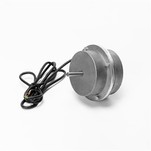
A servo motor is an electric motor that can precisely control position, speed, and torque, and its working principle is based on a feedback control system.
In a servo motor, it usually includes an electric motor (such as a DC or AC motor), an encoder (used to measure the position and speed of the motor), and a servo controller. When the servo system receives a control signal, the servo controller will process and analyze the signal, and then send the processed signal to the servo motor. The signal received by the servo motor is converted into mechanical motion through its internal control algorithm and driving device. At the same time, the encoder continuously measures the position and speed of the motor, and feeds back this information to the servo controller.
The servo controller compares the feedback value with the target value and adjusts the motor output in real-time to maintain the desired position and speed. In this way, the servo motor can move or rotate very accurately based on the control signal, even reaching an accuracy of 0.001 millimeters. This closed-loop control method ensures the accuracy and reliability of the servo motor in the automatic control system.