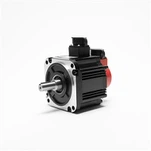
A synchronous motor is an electric motor that has the unique ability to rotate at a speed that is synchronized with the mains frequency. This synchronization is achieved through the interaction of the DC-powered excitation magnetic field with the rotor rotation.
The operation of synchronous motors is based on the principle of electromagnetic induction, in which the stator coils generate a magnetic field and interact with the rotor. A rotor made of electrically conductive material reacts to this magnetic field and produces torque that spins the electric machine.
The main characteristic of a synchronous motor is its ability to rotate at a constant speed synchronized with the mains frequency. This is achieved by carefully balancing the magnetic fields generated by the stator and rotor. The rotor speed is proportional to the power supply frequency, and the control is precise and stable.
One of the main advantages of synchronous motors is their ability to operate at high efficiency. They can be designed to operate at an optimal efficiency point for a specific application, delivering high torque and power output with minimal energy loss. This makes them suitable for applications requiring precise control and high power output, such as industrial drives, pumps, fans and other machinery.
Another key characteristic of synchronous motors is their ability to control speed and torque output. By changing the input voltage or frequency, the motor's speed and torque can be adjusted to meet specific requirements. This allows precise control of processes and machinery, ensuring consistent performance and accurate operation.
In summary, synchronous motors are an important component in a variety of industrial and commercial applications. Their ability to rotate at a constant speed synchronized with the mains frequency, coupled with high efficiency and precise control, makes them the first choice for a range of applications requiring reliable and efficient power output.